Greta Schmidt · 28 September 2026
Reimagining Note Organization with Intelligent Categorization Algorithms in Productivity Tools
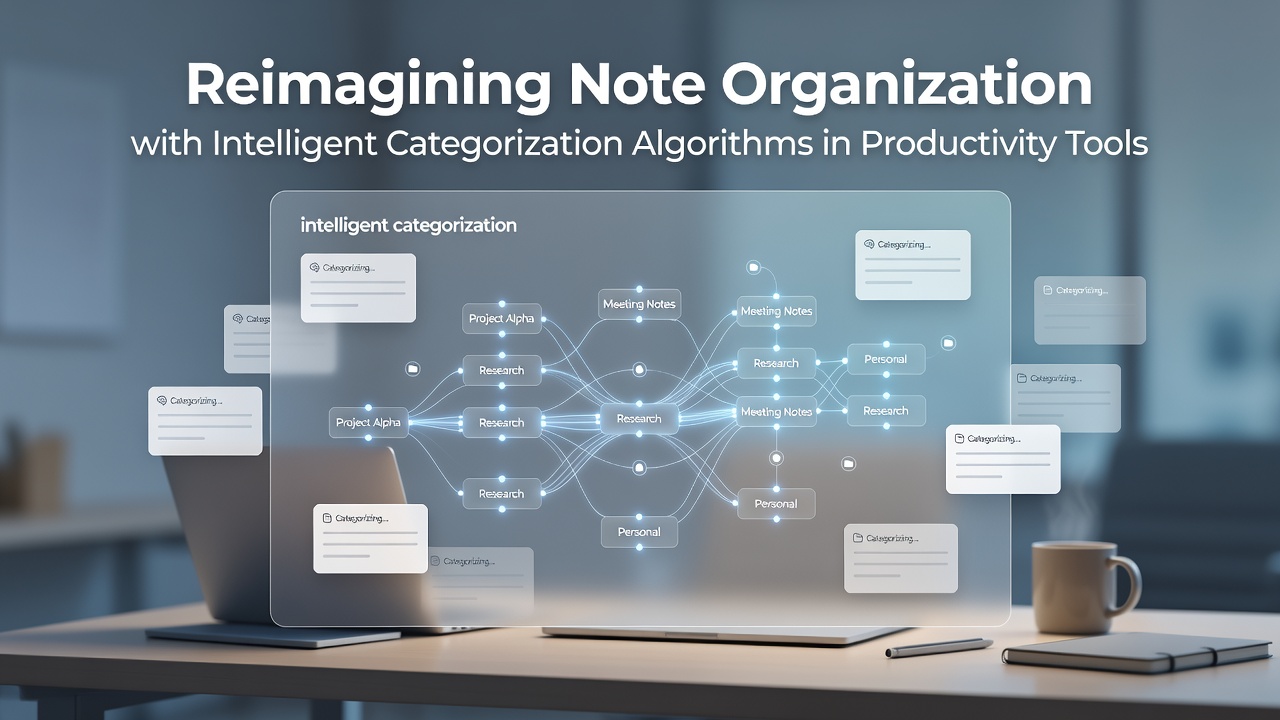
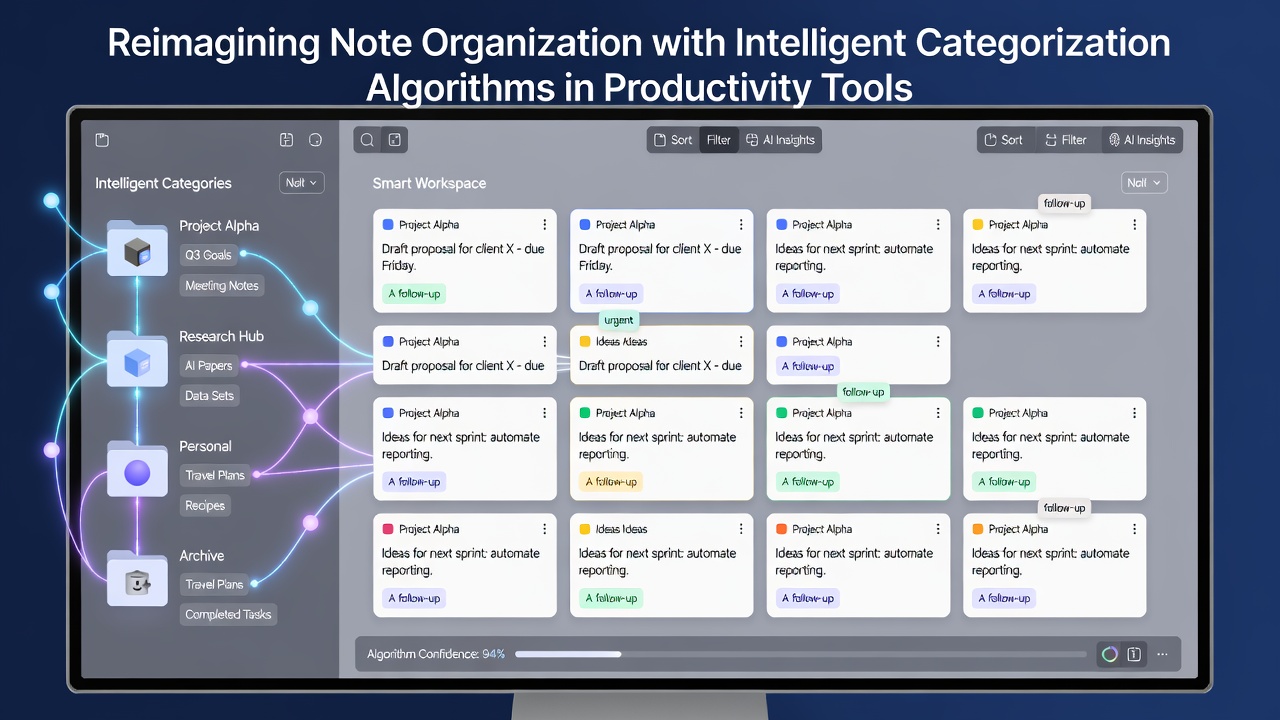
Productivity tools have incorporated intelligent categorization algorithms that process text, metadata, and user patterns to group notes automatically into relevant themes and projects. These systems rely on natural language processing combined with machine learning models trained on large datasets of annotated documents, which allows them to detect semantic relationships that keyword searches often miss. Data from industry reports indicate that adoption of such features has grown steadily since 2023 as remote work expanded the volume of digital notes created each day.
Traditional Limitations in Note Management
Manual tagging and folder structures require consistent user effort, yet studies show that people frequently abandon these systems after initial setup because maintaining them becomes time-consuming. Folders tend to multiply without clear boundaries while tags proliferate into overlapping categories that reduce retrieval speed. Observers note that this fragmentation appears most clearly in teams handling mixed research, meeting summaries, and project documentation where content crosses multiple contexts simultaneously.
Core Mechanisms Behind Intelligent Categorization
Algorithms begin by tokenizing note content and extracting entities, topics, and sentiment indicators through transformer-based models. They then apply clustering techniques such as hierarchical or density-based methods to form groups that evolve as new notes arrive. Embeddings generated from models like BERT variants capture contextual meaning so that notes discussing similar concepts but using different vocabulary end up in the same cluster. Researchers at several academic institutions have published benchmarks demonstrating accuracy improvements of 15 to 25 percent over rule-based tagging when tested on enterprise note corpora.
Integration with calendar data, email threads, and task lists supplies additional signals that refine category boundaries over time. One system deployed in a Canadian research laboratory automatically linked experimental logs with related literature notes after analyzing timestamps and shared keywords, which reduced the average time spent locating information during weekly reviews.
Implementation Across Major Platforms
Leading applications now embed these algorithms as optional layers that users can activate or customize through simple preference panels. Notion has introduced AI-assisted grouping that suggests database views based on page content, while Microsoft OneNote applies similar logic to section recommendations. Evernote's newer release uses on-device processing for privacy-sensitive users and cloud-based refinement for those who opt in to broader pattern analysis. In September 2026 several platforms synchronized their categorization engines with updated open-source models released by the Allen Institute for AI, which improved cross-language support for teams working across English, Spanish, and Mandarin notes.
Evidence from Deployments and Studies
A 2025 evaluation conducted by the Productivity Institute at the University of Melbourne tracked 180 professionals over six months and recorded a 32 percent reduction in time spent searching for past notes among participants using algorithmic categorization compared with control groups relying on manual methods. The same study found that new employees reached proficiency with company knowledge bases faster when algorithms pre-organized onboarding materials. Australian government agencies have begun piloting similar tools for policy document management, citing reduced duplication as a primary outcome in internal assessments.
European research networks have explored federated learning approaches that keep sensitive notes on local servers while still benefiting from collective model improvements. These efforts address data protection requirements under GDPR while maintaining categorization performance comparable to centralized systems. Figures released by the OECD in late 2025 highlighted productivity gains in knowledge work sectors that correlate with wider deployment of automated organization features.
Technical Challenges and Ongoing Refinements
Context drift remains a persistent issue because project priorities change and older notes may no longer belong in their initial clusters. Developers counter this through periodic re-clustering runs and user feedback loops that adjust model weights. Ambiguous terminology across disciplines also creates occasional misclassifications, prompting platforms to expose editable category rules that override algorithmic suggestions when needed. Observers report that hybrid approaches combining algorithmic proposals with lightweight human review currently deliver the most reliable results in fast-moving environments.
Conclusion
Intelligent categorization algorithms continue to reshape how notes are stored and retrieved by shifting the burden of organization from users to computational systems trained on semantic patterns. Deployments across industries demonstrate measurable improvements in retrieval speed and reduced duplication, while technical refinements address privacy and accuracy concerns. As platforms integrate updated models and cross-regional research collaborations expand, these tools are positioned to handle increasingly complex note collections without requiring additional manual effort from their users.